This is general information, not an individual diagnosis or treatment plan. Outcomes vary between people.
Where AI may help
Research explores ranking embryo images, recognising developmental stages and analysing clinical information. Such tools may support embryologists and clinicians. Performance must also be tested across centres, age groups and equipment. Decisions still need the full clinical context; an algorithmic score should not be interpreted as a personal outcome guarantee.
Continuous observation with time-lapse
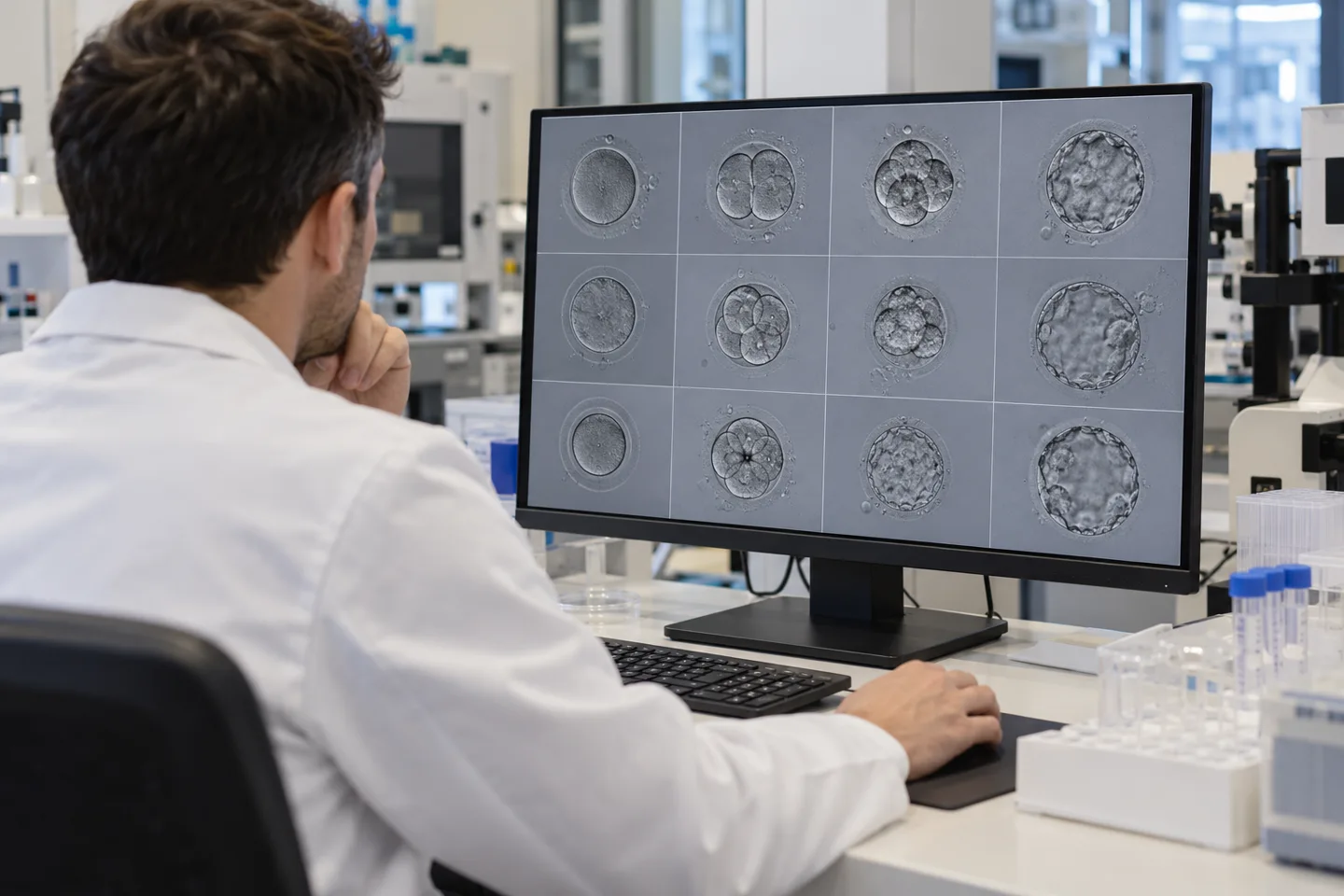
Time-lapse incubators provide images of embryo development. They can add laboratory information, but more images do not necessarily mean more live births for every patient. The algorithm, comparator and clinical outcomes need separate assessment. Ask what the particular system contributes in circumstances like yours.
Research into biopsy-free testing
Researchers are investigating DNA in embryo culture fluid as a source of genetic information. DNA origin, contamination, quantity and how well it represents the embryo remain important limitations. It cannot be assumed to replace embryo biopsy in every setting or eliminate all risk. Discuss the purpose and limits with a genetics specialist.
Realistic expectations for 2026
Individual assessment, laboratory quality and clear communication remain central as technology evolves. Ask for live birth evidence, safety information and results relevant to your patient group. Prof. Dr. Mehmet Çolakoğlu’s academic background provides a basis for discussing which options are meaningful for your situation, beyond the technology’s name.

Discuss your personal next step.
Prof. Dr. Mehmet Çolakoğlu began his academic career at Selçuk University in 1985 and has national and international experience. Contact the practice in Konya to discuss your circumstances and treatment options.
Appointments & Contact Explore publications