Stage of research
Laboratory validation · Not a clinical outcome trial
Mehmet Çolakoğlu website · Patient information ·
What is new in the 2025–2026 publication?
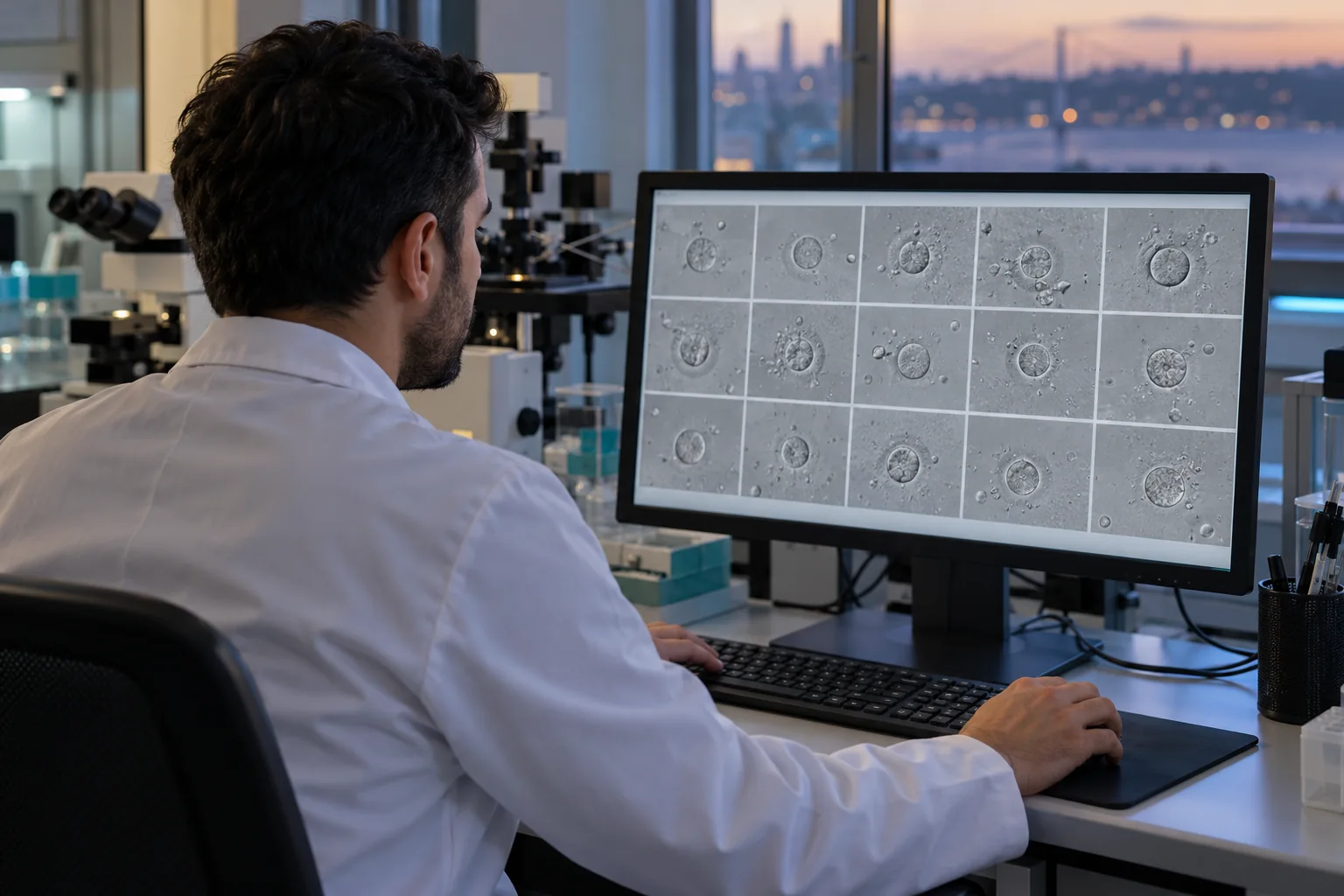
Published online in 2025 and in a 2026 journal issue, the study evaluated AI identification of round spermatids. It concerns cell selection, not demonstrated improvements in pregnancy or live birth. ROSI itself is not new. [1]
Why is cell selection difficult?
ROSI concerns an earlier germ cell, the round spermatid, rather than a mature sperm. Not every round cell seen under a microscope is a spermatid. Image-analysis research aims to support this distinction in the laboratory. Software does not create or mature the cell; it is being assessed as a potential aid to identification. [1]
Who might this matter to?
Accurate identification matters in selected situations where mature sperm are unavailable but suitable precursor cells are present. Azoospermia or unsuccessful Micro-TESE alone does not establish ROSI suitability. Whether better image classification improves fertilisation and later outcomes needs separate research. Identification performance must not be read as an individual pregnancy rate.
Prepare for a ROSI discussion
Collect surgical, pathology, embryology and genetic reports. Ask which further information could change the discussion, when a laboratory opinion should be obtained and how it connects with your joint IVF plan. Before meeting Prof. Dr. Mehmet Çolakoğlu, our introductory ROSI guide can help you organise more specific questions.
Frequently asked questions
Has AI been shown to improve ROSI success?
The study discussed here focuses on recognising cells. It should not be presented as evidence of increased pregnancy or live-birth rates with AI.
Should every patient with azoospermia consider ROSI?
Do not infer suitability from the diagnosis alone. Ask specialists to assess earlier cell findings and the couple’s circumstances together.
Sources
Updated: