Stage of research
Early clinical use · Single-centre experience
Mehmet Çolakoğlu website · Patient information ·
What has been reported?
Columbia’s STAR combines AI with microfluidic sperm recovery. The centre reports finding sperm in about 28% of previously diagnosed patients and a healthy delivery. This is not a birth rate: STAR searches for existing sperm rather than producing them. [1]
The target: separating a rare cell
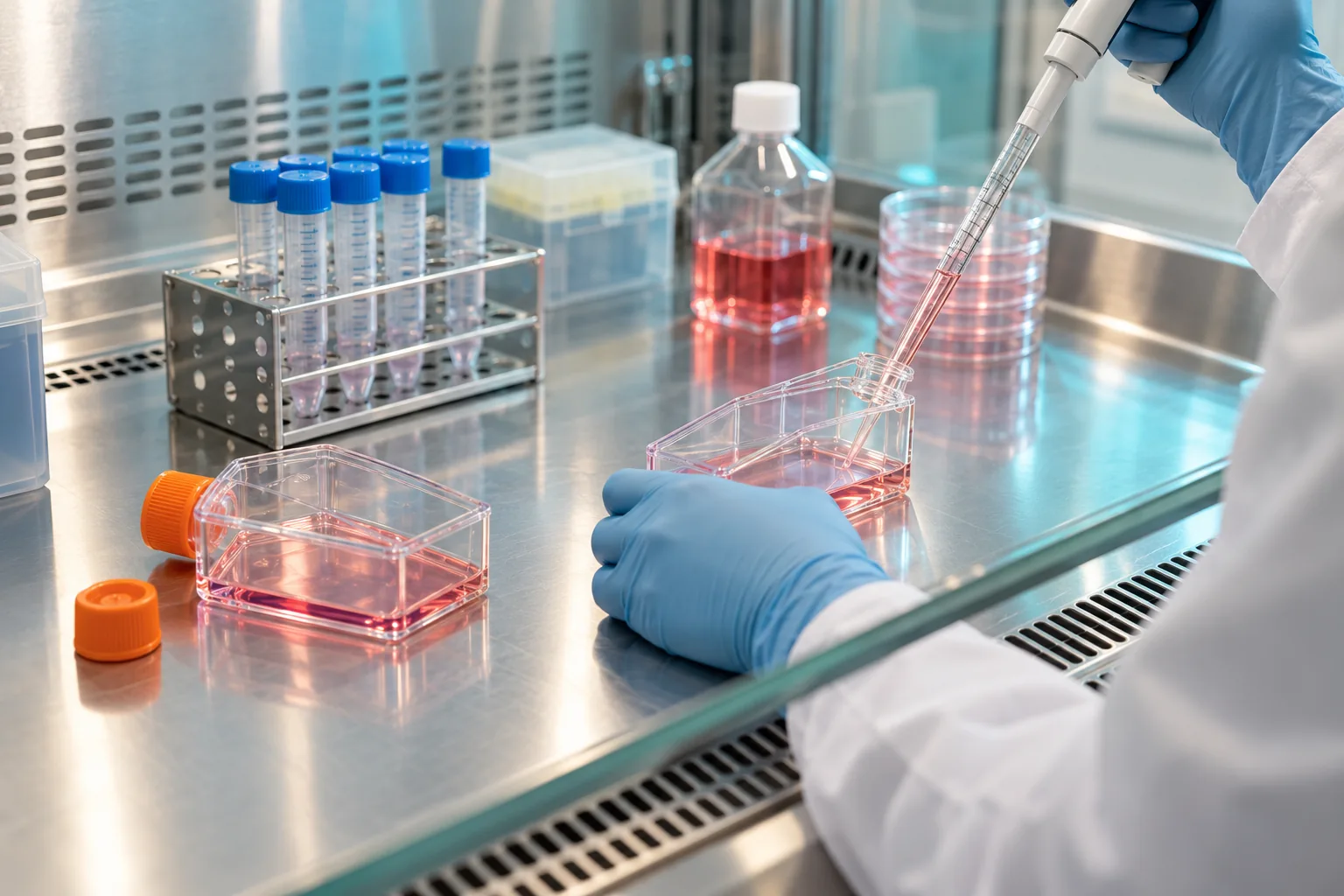
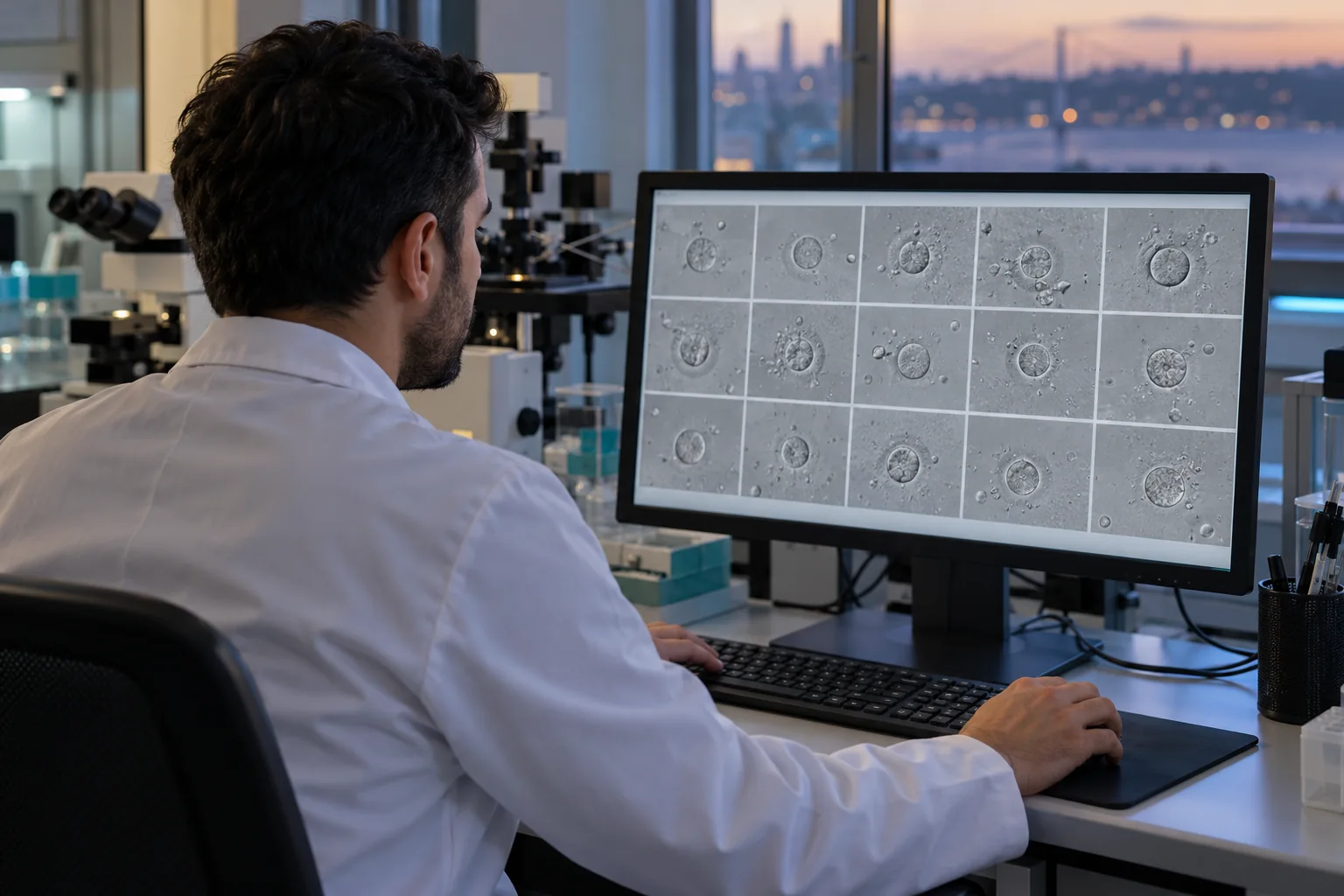
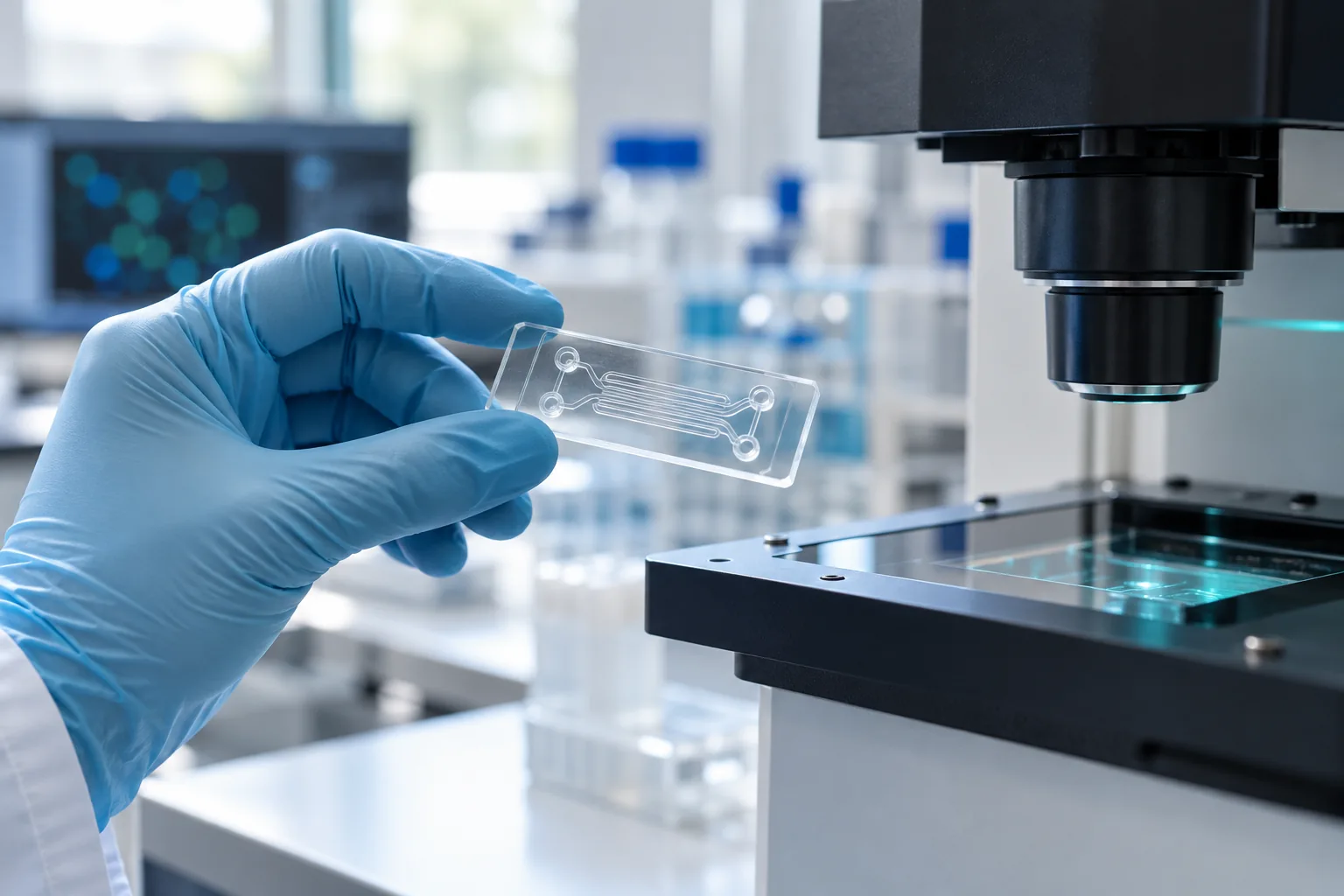
In the STAR approach, high-speed images are captured while a sample passes through very fine channels. Software flags candidate sperm and a microfluidic system aims to recover them separately. The advance is a more detailed search of an existing sample. Previously undetected sperm and absent production are therefore different possibilities; laboratory findings need interpretation alongside earlier diagnostic and surgical records. [1]
Who might benefit from this direction?
The central question is whether sperm are present at levels missed by conventional examination. Finding a rare sperm may open a discussion of an IVF plan, but recovery, usability and embryo development remain separate assessments. This can justify reviewing a previous negative result; it cannot establish that every patient will have a new result or avoid surgery.
Separate centre experience from your own chance
When comparing yourself with a centre’s results, ask about patient selection, assessment methods and the outcome being followed. An early positive case cannot establish your own probability. Your discussion should cover the search’s purpose, possible next steps and the plan if it finds nothing; any need for surgery requires separate assessment.
Frequently asked questions
What does the reported 28% mean?
It refers to Columbia’s experience of finding sperm. It must not be used as an individual pregnancy or live-birth probability.
Does a consultation include a STAR procedure?
This article explains research and does not advertise a particular device or procedure. A consultation reviews your records and the appropriate assessment pathway.
Sources
Updated: