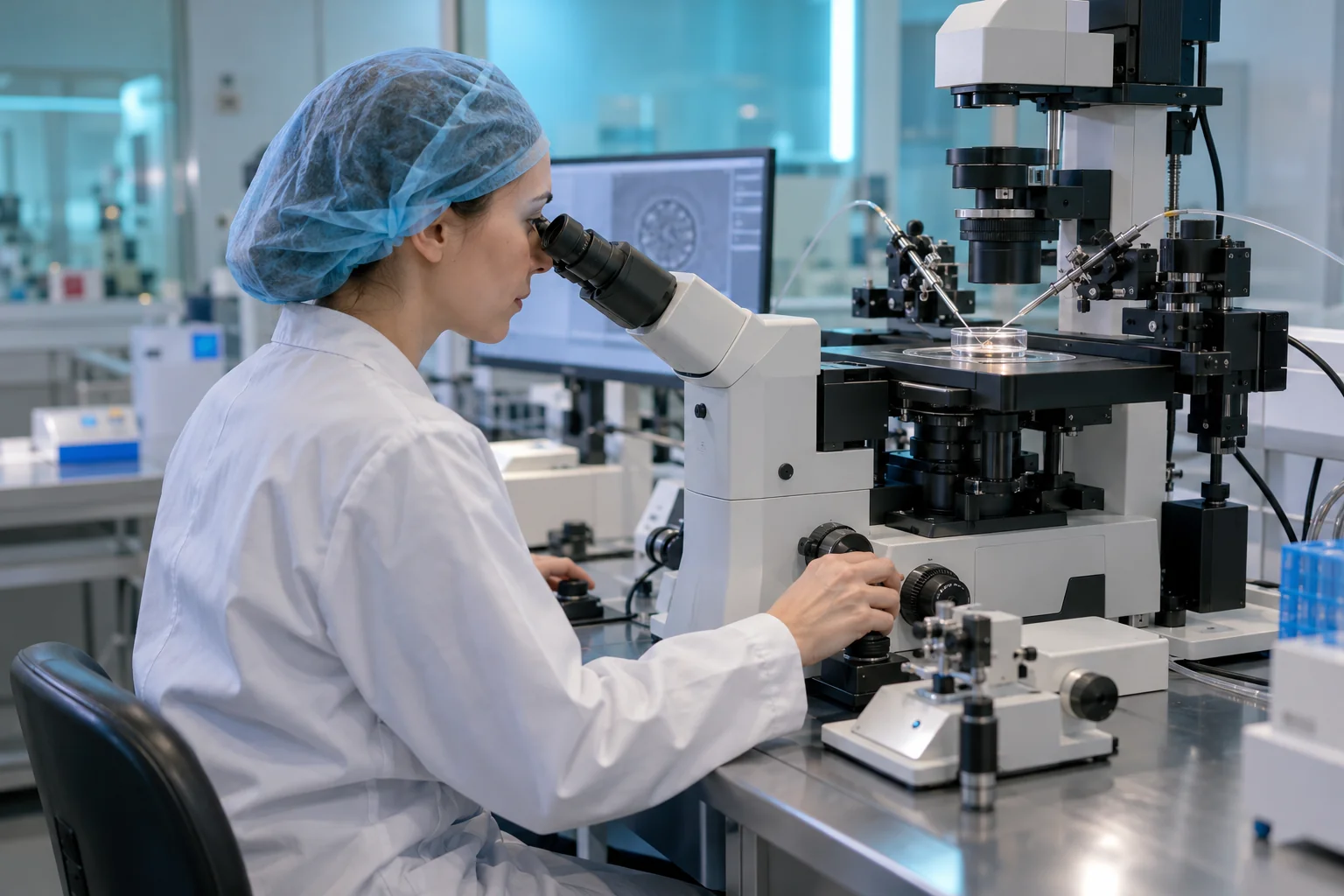
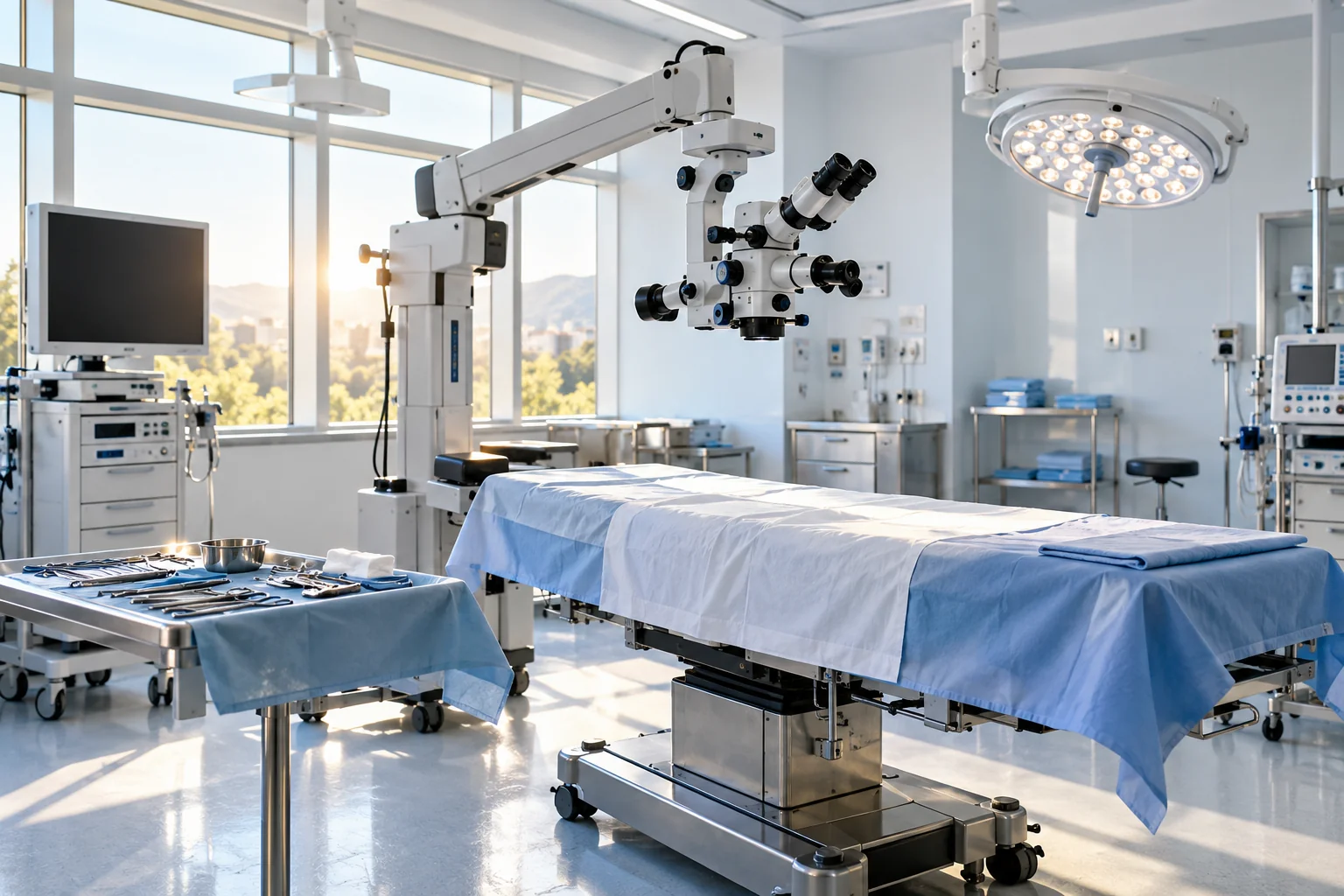
Searching for sperm under a microscope
A urologist examines testicular tubules with an operating microscope and takes samples from selected areas. The embryology laboratory examines the tissue for sperm that may be usable in treatment. Surgical work and laboratory assessment are complementary parts of the process.
Choosing the appropriate method
Micro-TESE is considered particularly for non-obstructive azoospermia. Men with an obstruction may have different retrieval or reconstructive options. Genetic findings can also affect whether surgery is appropriate. The method should be chosen after the cause has been assessed.
If sperm are found
Retrieved sperm may be used for intracytoplasmic sperm injection, or ICSI. Whether to use fresh sperm or consider freezing depends on the sample and the couple’s treatment schedule. Sperm retrieval, fertilisation, embryo development and live birth remain separate stages.
Questions before surgery
Discuss anaesthesia, recovery, bleeding and infection risks, hormone follow-up and the plan if sperm are not found. Your team should provide individual postoperative instructions. There is no single retrieval probability that applies to every patient.
Frequently asked questions
Does Micro-TESE always find sperm?
No. Retrieval depends on the underlying cause and individual findings. A successful result cannot be guaranteed.
Are TESA, TESE and Micro-TESE the same?
No. The sampling technique and use of a microscope differ. The appropriate approach depends on the type of azoospermia and the assessment results.
Sources
Updated: