Stage of evidence
2025 first-live-birth case report · Early clinical stage
Mehmet Çolakoğlu website · Information article ·
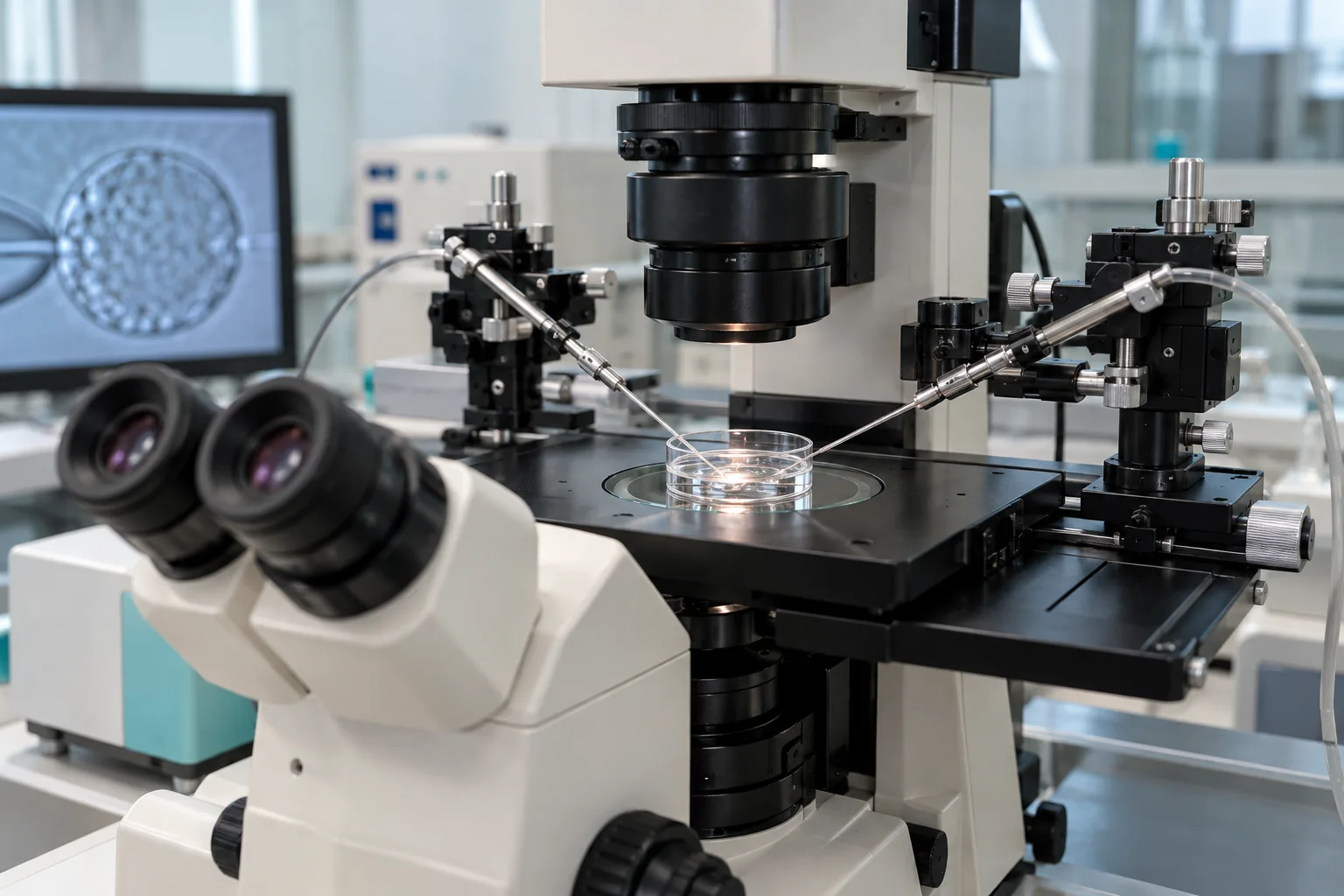
What robotic ICSI means
ICSI places one sperm inside an egg. Robotic or digital control aims to automate its micromanipulation steps. It does not mean an entire IVF treatment runs without people: patient care and laboratory supervision still require expertise. [1]
What was reported in 2025?
A case report described the first live birth using a remotely controlled system automating 23 microinjection steps. A birth establishes an important feasibility milestone, not proof of higher success or lower cost in a large comparative trial. [1]
Why it is promising
Standardising precise procedures might improve consistency between laboratories in the future. Whether that translates into better patient outcomes must be measured separately. Technical performance and overall clinical benefit are different questions.
Questions about treatment today
Do not choose treatment solely by a device or robot name. Ask about laboratory quality processes, access to embryology reports and why ICSI is proposed for you. Male-factor findings, previous fertilisation results and the couple's overall assessment should be considered together.
Following the research
Look for comparison groups, patient numbers, live births and safety follow-up in future publications. A single case cannot establish results for everyone. Research can be followed while current assessment and treatment options are planned around individual needs.
Frequently asked questions
Does a robot perform the whole treatment?
No. The research concerns automation of the microinjection part of ICSI.
Has a higher live-birth rate been proved?
The case report cannot establish that. Adequately sized comparative studies are needed.
Is this system offered here?
This article describes research, not a statement that the practice or hospital provides the system.
Scientific sources
Published and updated: